Neuroscience Breakthrough: Scientists Debunk 150-Year-Old Brain Theory
University of California researchers discovered a brain region that forms words before they are spoken, paving the way for advanced brain-computer interfaces.
 💡Tech
Photo: UNIAN
Key points
- UCSF scientists identified the lpSTG brain region that forms words prior to speech execution.
- The finding challenges a 150-year-old theory regarding speech perception and production zones.
- Results may improve brain-computer interfaces for paralyzed individuals unable to speak.
Modern neuroscience has taken a significant step forward that could reshape approaches to treating and rehabilitating individuals with severe speech impairments. A team of researchers at the University of California, San Francisco, led by Edward Chang, has proven that classical assumptions about speech processing in the human brain require substantial revision. The study challenges a theory that has stood for a century and a half.
A New Perspective on Wernicke's Area
Back in the 1870s, German neurologist Carl Wernicke hypothesized that a specific area in the posterior temporal lobe was responsible for both perceiving and generating words. However, the scientific community long viewed this region primarily as a center for comprehending heard speech, while motor articulation was thought to be managed elsewhere. New research published in Science demonstrates the fallacy of this strict separation.
The scientists focused on the left posterior superior temporal gyrus (lpSTG) and found that neurons here activate roughly a quarter of a second before a person starts speaking. This area does not merely process meaning; it constructs a preliminary plan for the upcoming word—its length, syllable count, and usage frequency—before passing the information to motor control regions.
Implications for Future Technologies
This discovery holds immense practical value for medicine and the development of brain-computer interfaces (BCIs). Existing BCI systems typically decode signals from motor areas, which can be damaged in individuals who have lost their ability to speak. Utilizing neural activity from the lpSTG as an alternative signal source offers a promising pathway to accurately decipher intended words.
Beyond engineering advancements, these findings will help neurosurgeons map speech areas more precisely prior to surgical procedures. This potentially reduces the risk of damaging vital communication centers during critical operations.
Source UNIAN — unian.ua/science/vcheni-znayshli-v-mozku-zonu-yaka-po-inshomu-vpliv… ↗
Read next
 🇺🇦Ukraine
Boris Pistorius apologizes for sharp rhetoric towards Pentagon official
The German Defense Minister clarified his reaction to criticism of Ukrainian strikes on Russia, apologizing for his choice of words while maintaining his stance.
 🚌Transport
Ukraine Seeks to Deepen Railway Modernization Cooperation with Deutsche Bahn
During the German-Ukrainian Business Forum in Berlin, officials discussed expanding railway infrastructure partnership.
 🩺Health
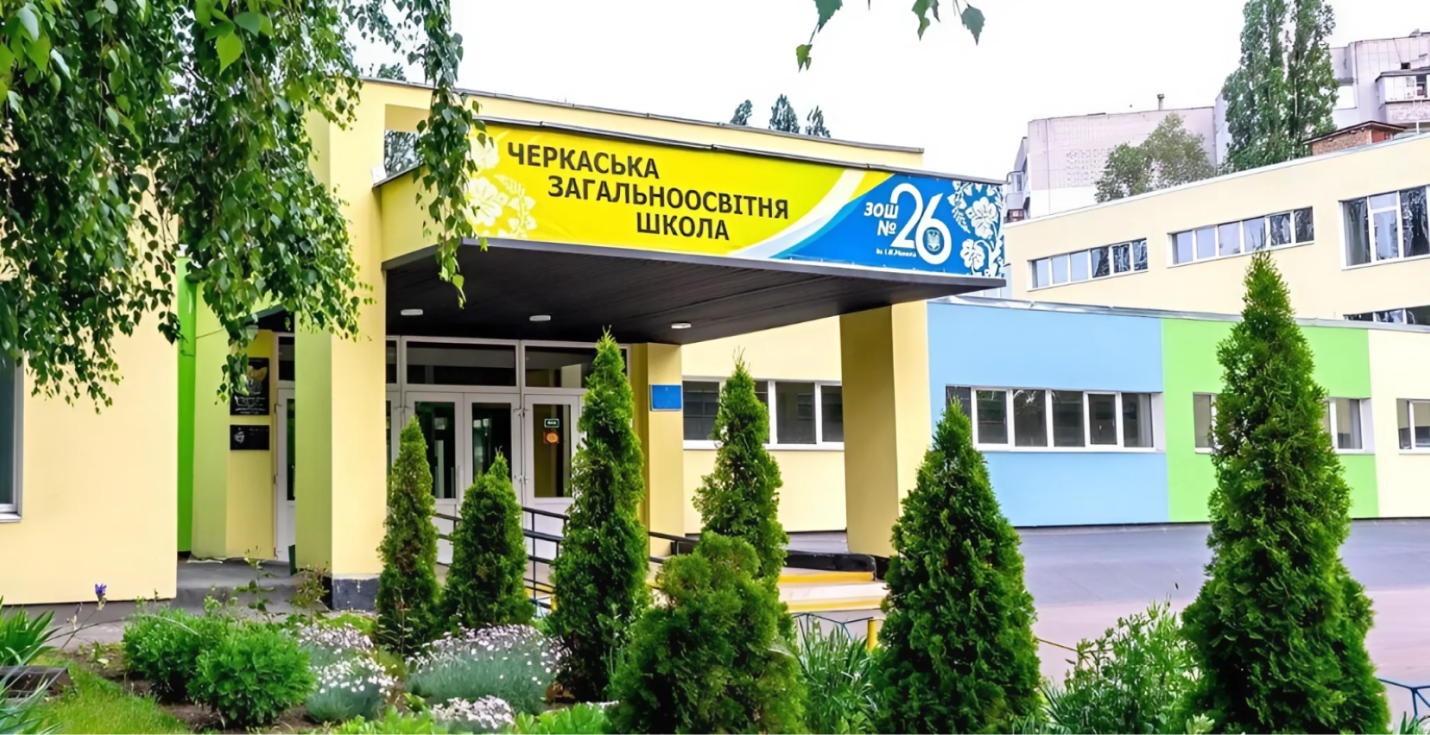
Tuberculosis Outbreak in a Cherkasy School: Parents Demand Remote Learning
Several cases of tuberculosis have been detected at Cherkasy School No. 26, prompting parents to push for remote learning. School administration and health officials stat…
 🚨Events
Chornobayivshchyna Bids Farewell to Serviceman Serhiy Fedchenko
A farewell ceremony for serviceman Serhiy Fedchenko, who had been defending Ukraine since March 2022, took place in Lukashivka village. His heart suddenly stopped while h…
 🏛️Politics
Four Steps to Transparency: Experts Outline Ways to Improve Verkhovna Rada's Openness
During Global Parliamentary Openness Week, experts reviewed the current state of the Ukrainian parliament and proposed essential steps to eliminate closed-door decision-m…
 🇺🇦Ukraine
Kremlin Rejects Kaja Kallas's Participation in Potential Ukraine Peace Talks
The Russian Foreign Ministry has stated that EU foreign policy chief Kaja Kallas is unacceptable as a negotiator, claiming her involvement would derail peace talks.